Level up: How to raise a healthy video gamer and avoid gaming addiction
Parenting a child or teenager who loves gaming can feel overwhelming at times. You might be worried or feeling guilty about the amount of time your child spends playing video games. Or perhaps struggling to monitor the games they’re playing and who they’re playing with. Or maybe you’re unsure about how to handle the outbursts that can happen when it’s time to switch off.
As a parent or carer, you may be wondering whether playing video games is good for your child at all. Or perhaps, on the flipside, what all the fuss is about. It might seem like everyone you talk to has a different view on gaming. Some parents allow unrestricted play, others ban it outright, and many try to find a happy medium.
Parenting in the digital age isn’t always easy, but there are ways to reduce the guilt and find a healthy balance. By understanding the benefits and risks involved with gaming and using positive parenting strategies, you can level up your tech parenting skills to help your child have fun and stay safe.
Ready player one: The positives and negatives of gaming for kids
Games have been around for centuries and are an age-old pastime for adults and children alike. We play games to socialise, problem solve and have fun, whether playing cards, chess or Mario Kart.
In recent decades, video games have come a long way. Highly immersive gaming experiences with stunning visual and sound effects are now designed for every age and ability. It’s no wonder kids love them so much! Children can get lost in a virtual world playing on their own, connect with friends or find new ones to play with all over the globe.
In the modern world, gaming is a common way for kids to relax, have fun and socialise. Gaming is a phenomenon seen around the world, with nearly nine in 10 children in middle and upper-income countries playing online games.
The positives
Studies have shown the benefits of gaming for children and teenagers can include:
- Builds social skills and fosters teamwork
- Encourages creativity and imagination
- Improves hand-eye coordination and multi-tasking
- Improves cognitive skills such as problem-solving, working memory, critical thinking and strategising
- Enhances wellbeing
Like many things in life, gaming is best enjoyed in moderation. Problems and gaming addiction can occur when gaming becomes excessive, so it’s important to help your child stick to screen time guidelines as much as possible. The World Health Organization recommends no screen time for children under two, less than one hour a day for children aged between two and five, and limiting recreational screen time for older children and teens.
Quality content that is age-appropriate is also key, so be sure to check the game classification or rating and read independent reviews on reputable websites. Younger children may benefit more from creative and non-competitive games while older children may find cooperative or skills-based games more enjoyable and challenging.
The negatives
Research has identified risks associated with gaming for children and teenagers, especially when done excessively or without boundaries. These can include:
- Mental health concerns such as depression and anxiety
- May interfere with getting enough sleep, physical activity and real-life social interaction
- In-game features that normalise betting behaviours (such as loot boxes that are chance based) and increase the likelihood of future gambling
- Gaming disorder or gaming addiction, causing significant personal, family, social or educational issues
- Exposure to inappropriate content/advertising, cyberbullying, offensive language, hate speech, sextortion and criminal networks in chat rooms with strangers
- Physical health issues/injuries to thumbs, wrists, elbows and eyes
Although findings are mixed, some studies have suggested that playing violent video games may be linked to aggressive behaviour in some children1. It might help to consider these carefully and double check the age rating first – and look out for how they may be affecting your child.
Using positive parenting strategies to raise a healthy gamer
There are lots of ways parents and carers can increase the benefits, minimise the risks and help their child develop healthy gaming habits.
How to raise a healthy gamer:
- Make a family screen time plan
Organise a family meeting where everyone is invited to share their thoughts and ideas. You may find it helpful to look at a daily plan for time spent on physical activities, homework, chores, family time, screen time and getting enough sleep.
Getting children involved in the plan helps them feel seen, heard and valued. You may even be surprised by their willingness to set their own screen time limits after you explain how they keep them healthy and safe. Being part of the discussion also helps kids and teens stick to the rules – although they may need reminders from time to time.
Decide when and what they can play, for how long and what the consequences are if they break the agreement. It can help if consequences are related to the behaviour and easy to follow through. For example, if your child plays for 30 minutes longer than agreed, they lose 30 minutes of screen time the next time they’re allowed to play. You may like to allow some flexibility here as it can be difficult – and frustrating – for kids to have to end a game mid-play, especially if they’re just about to win! This can be a major cause of emotional challenges when it’s time to finish up.
Giving your child a 10-minute reminder, allowing them to finish the game they’re playing, and thanking them for getting off at the agreed time will help your child feel respected and understood – and hopefully keep the peace! - Play video games and online games together
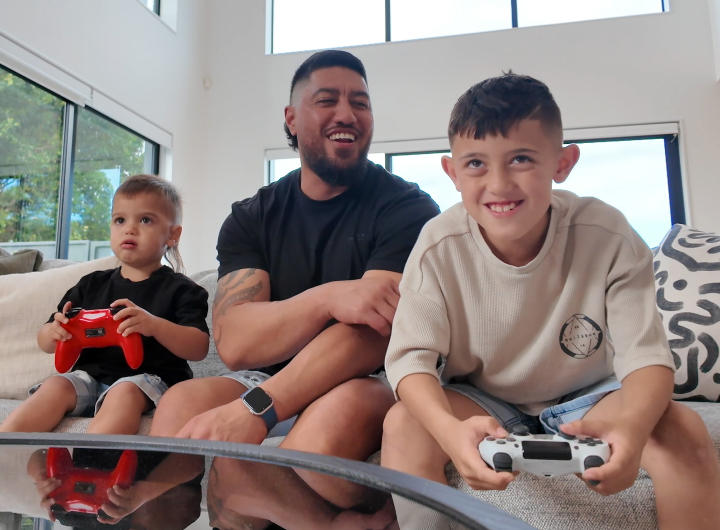
Spending time playing video games with your child has lots of benefits. Whether it’s for 10 minutes or a few hours each week, you’ll likely get a better understanding of why they love gaming, learn about the types of games they play, and argue less about their gaming habits. You’ll also be a setting a positive example in how to play video games responsibly, and be able to identify if you need to adjust parental control settings or turn certain features (such as chat rooms) off.
Most importantly, playing video games with your child helps you spend more time together having fun and enjoying each other’s company. This does wonders for strengthening your relationship and bringing you closer together. When times get tough or problems arise, your close relationship will also help your child feel more comfortable opening up to you and asking for help. - Encourage independence and problem-solving skills
Giving kids a chance to sort out disagreements or friendship dramas online before jumping in to “fix” things can help build their independence and problem-solving skills.
It might help to ask yourself, “What could I do for a few minutes while they try to sort this out?” Maybe it’s making a making a cup of tea or coffee, or perhaps checking the mail. While you may need to step in if the behaviour becomes problematic or disrespectful, by giving kids a chance to sort things out, you’ll be helping them build skills they can use both online and in the real world. - Give clear, calm instructions to encourage respectful online behaviour
Talk to your child about what is and isn’t okay when they’re gaming. If you notice them shouting with anger at their friends through the headset when a game is getting heated, for example, you might like to try clearly and calmly asking them to “Please stop shouting and speak kindly.” If the shouting or gaming rage continues, you could try giving a short and logical consequence, such as stopping play for 15 minutes, before trying again
Naming the emotion and taking a break also helps your child develop emotional regulation skills and manage big feelings. “It’s okay to be angry, but it’s not okay to shout like that. How about you take a break and grab a glass of water/go outside for a stretch/play with the dog for 15 minutes, then you can try again.
Every child is unique. If you notice certain games are causing problems, it might help to talk to them about what’s going on or guide them towards playing a different game for a while. - Give praise and positive attention to balance gaming time with real-life activities
Praise and positive attention can be used in lots of ways to help raise a healthy gamer. Noticing and praising your child when they’re playing well with their friends, or stopping screen time when they agreed to, or putting their controllers away neatly, helps encourage more of the behaviours you like to see. You can also use it to balance gaming time with real-life activities that are vital to your child’s physical and mental health, development and wellbeing.
When your child decides to do a non-gaming activity, such as jumping on the trampoline, you could try giving them praise by saying something like “That’s a great idea to go outside.” Or even better, give them positive attention too by hugging them when you praise them. Or go outside with them and spend some quality time together. Praise and positive attention work for children of all ages, including teenagers, so think about what might work for your family.
Game on!
Learn more about positive parenting through our online programs
Every parent can benefit from evidence-based strategies to support their child.
For families of children aged under 12, Triple P Online offers positive strategies to help you handle everyday parenting challenges with confidence.
For support with teens, you could try Teen Triple P Online.
For parents and carers of children experiencing anxiety, Fear-Less Triple P Online can help.
And for parents who are divorcing or separating, try Family Transitions Triple P Online.
Triple P – Backed by research, proven by parents.
References
- Burkhardt, J., & Lenhard, W. (2022). A Meta-Analysis on the Longitudinal, Age-Dependent Effects of Violent Video Games on Aggression. Media Psychology, 25(3), 499–512. https://doi.org/10.1080/15213269.2021.1980729